Australia's most unusual places

The country of kangaroos and koalas combines several climatic zones and is famous for its distinctive landscapes. The flora and fauna is unparalleled in the world. Only here you will see wombats, platypuses and Tasmanian devils.

Large cities will please party people with plenty of entertainment; beaches will please thrill-seekers and connoisseurs of a quiet holiday. Today, I want to focus on the unique sights of Australia. I present a selection of 18 surreal places as if descended from the pages of novels about distant unexplored planets.

Table of Contents

1. Heart-shaped reef, Queensland

Heart Reef

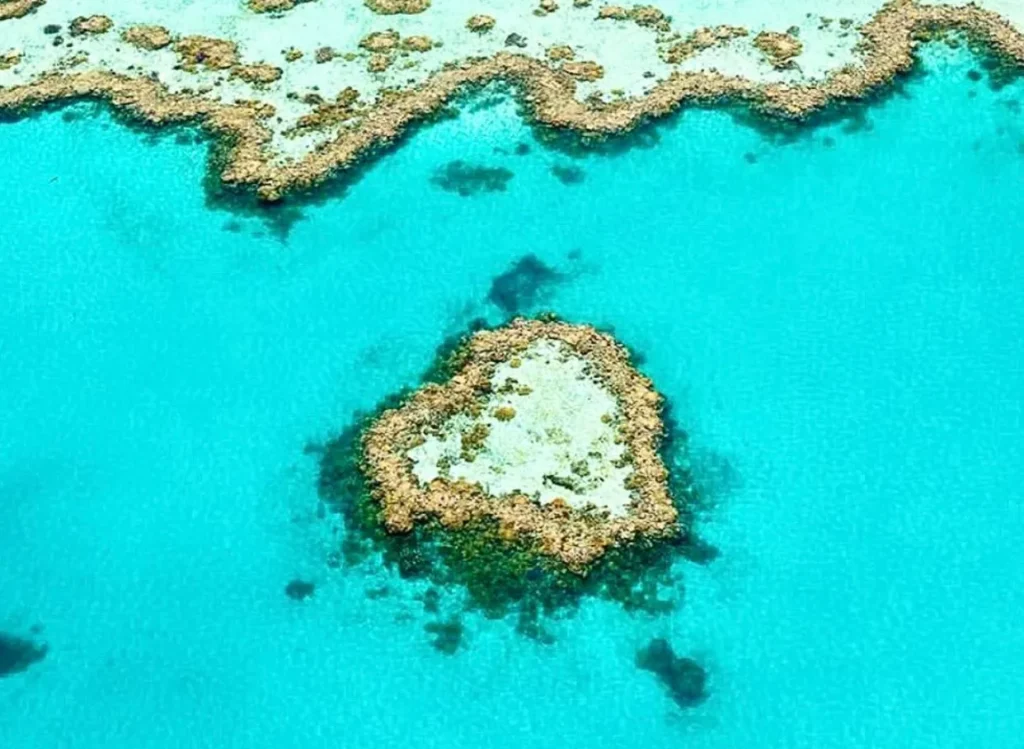
Heart Reef was discovered in 1975 by an Air Whitsunday pilot. Today, it is among the most popular sites in Australia. Romantic types particularly favour the attraction. There is a belief that if you fly over the reef and kiss your loved one, your feelings will survive any adversity. The island is an integral part of the Great Barrier Reef and is made entirely of coral polyps. Its dimensions are about 17 metres in diameter. The peculiar shape can be seen exclusively from a height. The heart reef is guarded 24 hours a day, and landing on the island is strictly prohibited. 

2. Mount Uluru, Northern Australia

Mount Uluru

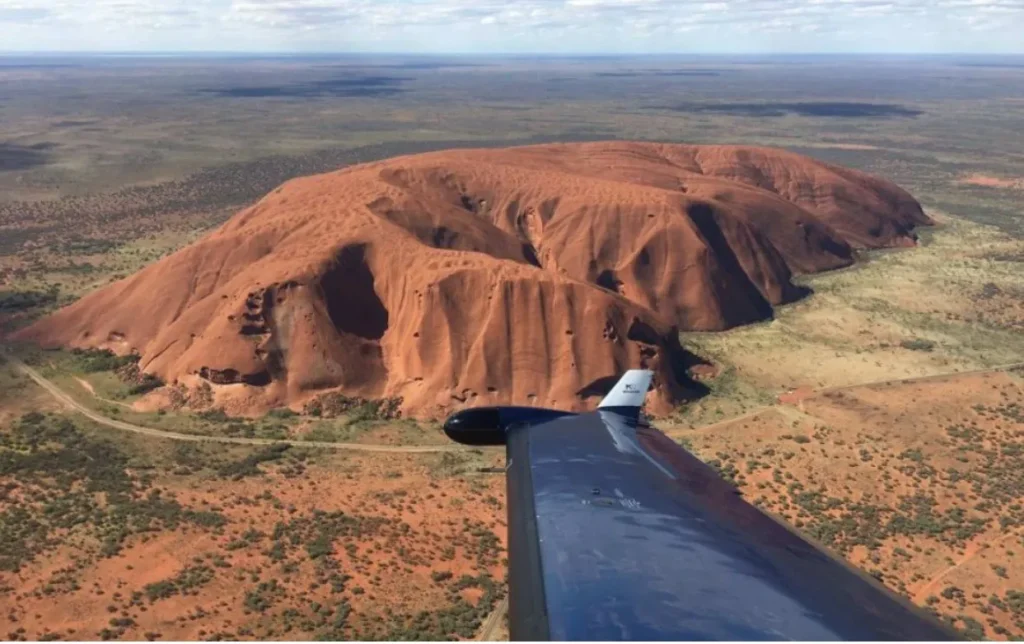
Perhaps one of the most hyped places on the continent is the Urulu-Kata Tjuta National Park. It is in the desert zone and extends over 1,326 square kilometres. The park’s world is due to its specific landscape. The iconic cliffs of Kata Tiuta, which translates from the local language as ‘Many Heads’, attract thousands of tourists like a magnet.

Mount Olga stands proudly above 35 roughly identical stone blocks. It is named in honour of the daughter of Russian Emperor Nicholas I, who married King Charles I of Württemberg in 1846. The mountain is 1,066 metres above sea level. Due to the high iron oxide content in the rocks of Kata Tjuta, the stones are red. You get the impression that you are conquering the vast expanse of Mars.

3. Sculptures at Lake Ballard, Western Australia

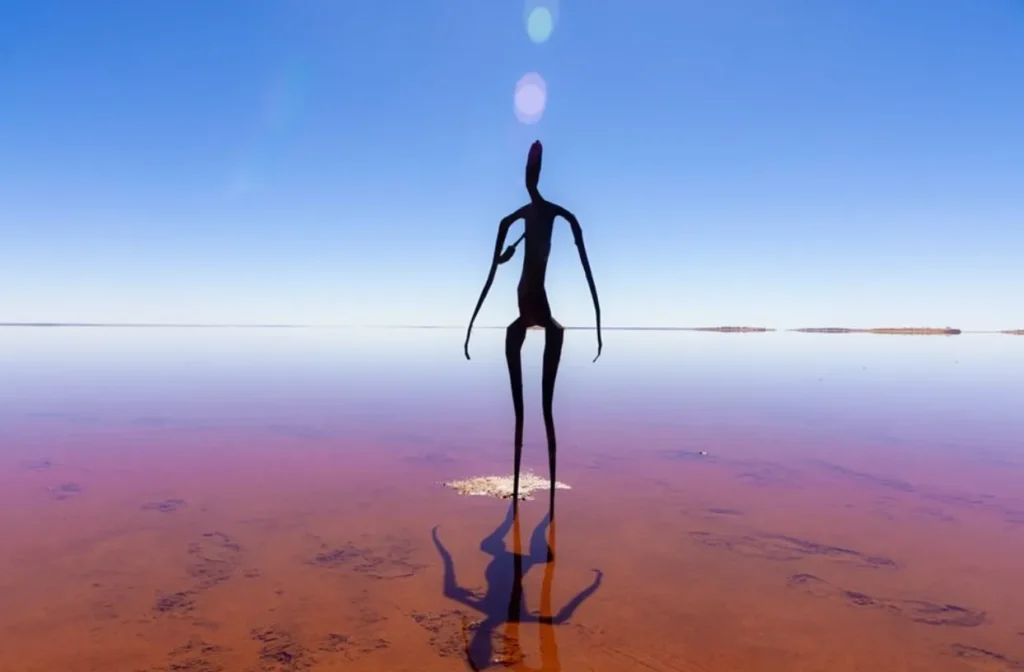
This installation by internationally recognised artist Anthony Gormley has become a symbol of Western Australia. There are 51 metal statues, each one unique, set on the salted plain of Lake Ballard. The monuments depict the people of Menzies, a town founded in 1895 that flourished in the following decade of the gold rush. The composition was unveiled at the Perth International Arts Festival in 2003.

The neighbourhood of Lake Ballard is very original. The body of water dries up almost entirely during the summer. Salt mixes with the clay soil, painting tens of kilometres in a brownish colour with whitish veins. Gormley’s sculptures are placed throughout Gormley’s area, and it would take a minimum of 3 hours to get around all of them. The rusty figures stand out clearly against the blue sky and look frightening. It seems as if the dead have risen from their graves. I wouldn’t want to be that. 

4. Bay of Fires, Tasmania

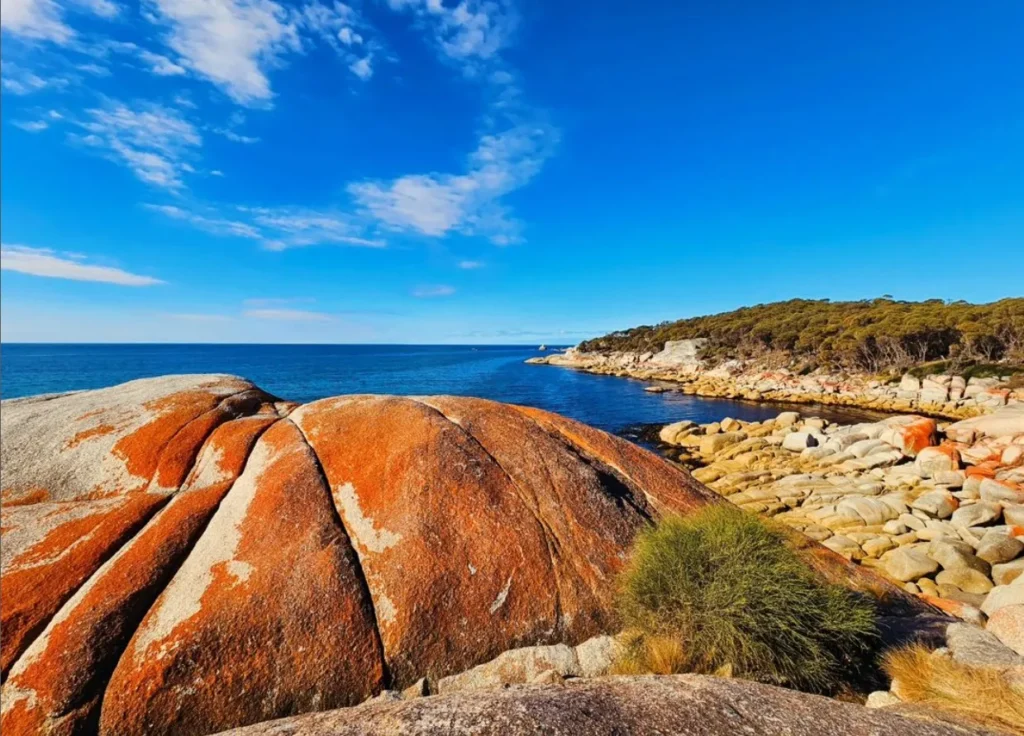
Mount William National Park is an amazing place that combines a white sandy beach and an ocean of sky blue and bright orange rocks. A rare species of lichen has taken up residence on the huge boulders. According to the official version, the name of the bay was given by the ship captain and the discoverer of Tasmania, Tobias Furneaux. In 1773, from the deck, he saw Aboriginal fires on the land, which led him to the new lands. The colour of the rocks evokes the flames of those beacons.

Everywhere you look, there is beauty all around. If you wish, you can swim in secluded coves, admire the scenery from the rocky cliffs or walk through the dense forests of protected areas. For those keen on extreme sports, the organisers of tourist leisure activities will offer surfing, diving or kayaking

5. Whitehaven Beach, Queensland 

Whitehaven Beach, Queensland 

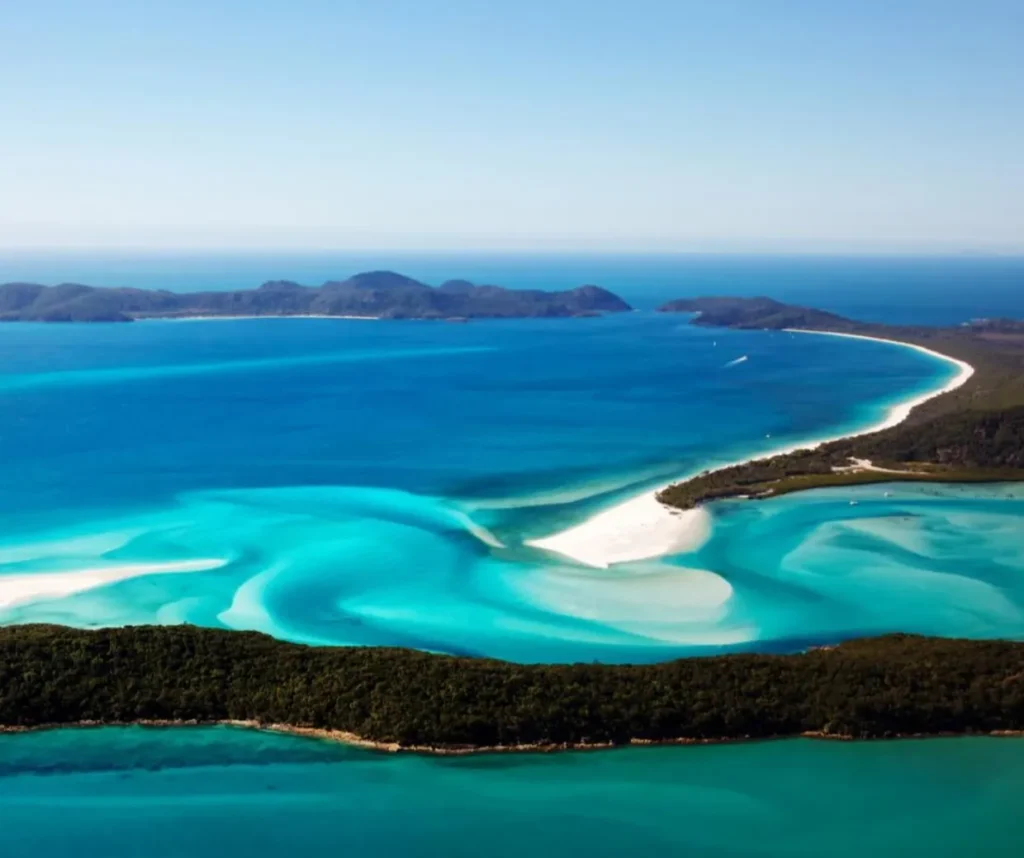
Whitehaven Beach is approximately 7 kilometres long and snakes around the coastline of Whitesanday Island. Getting to it is not a problem. Tourist boats depart every half hour from Airlie Beach, Shute Harbour, and Hamilton Island harbours. In November, it hosts the Hamilton Island Triathlon Event championship triathlon competition. 2008, Whitehaven Beach won a high national award and was voted Australia’s best holiday destination. 2015, it was placed at the top of the South Pacific Coast beach rankings.

READ  A Comprehensive Guide to Hiking Trails in Kakadu National Park

Crystal water washes over white sands composed of 98 per cent purity silica. The covering of the beach was formed over millions of years, sea currents carried shells from the depths, polished them to a flawless shade and dispersion. Sand has the unique property that it does not conduct heat and, therefore, does not get hot. You can safely wander barefoot even on the hottest day. 

6. Pinnacles, Western Australia

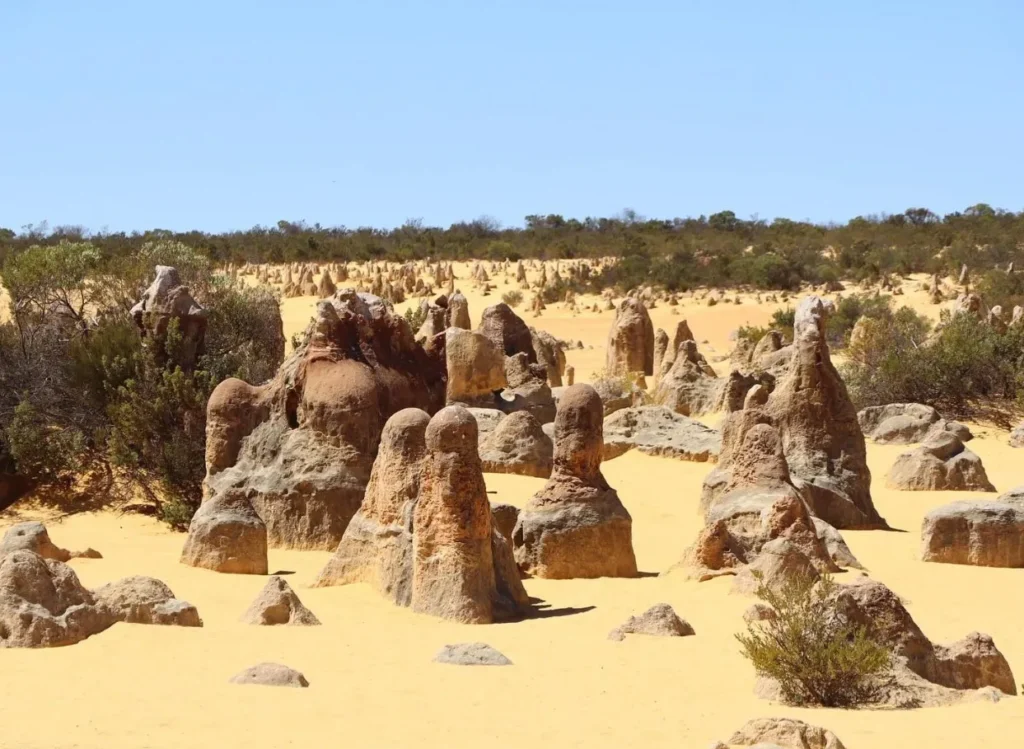
The landscape of southwestern Australia is predominantly sun-scorched plains. Here, you will find the small but worthy of your attention Pinnacles Desert. The area’s name translates to ‘desert of pointed rocks’. Impressive limestone blocks of bizarre shapes come to the surface from the depths of the earth. The height of the formations varies from 1 to 5 metres. The leading minds of the scientific community are struggling to find out the true causes and conditions of the formation.

Imagine, Pinnacles were not explored until the 60s of the last century. Only after the land was annexed to the National Park did the area open up to the public. The ideal time to travel is from August to October. Spring begins in the desert, heat-tolerant plants sprout green leaves, and all the flora in the area blooms. A spectacular shadow play accompanies Dawn and dusk. Towards evening, ostriches and kangaroos come to the valley. 

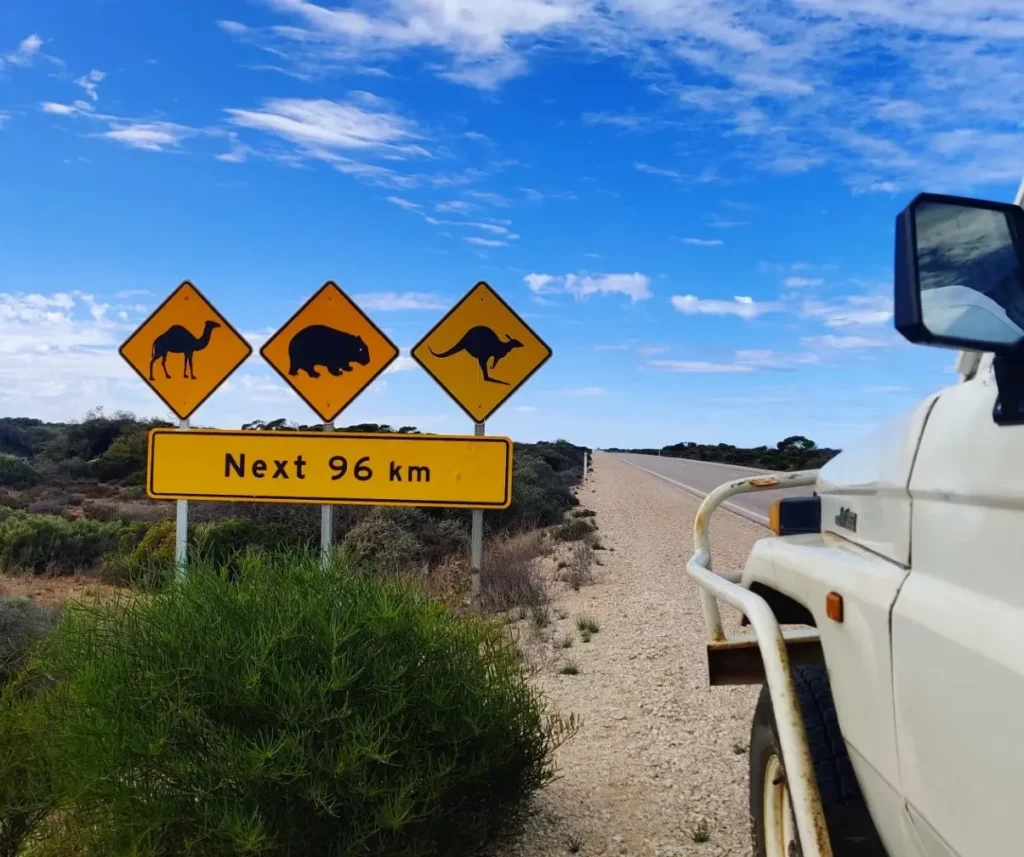
7. Nullarbor Plain, Western Australia

Nullarbor Plain, Western Australia

I never cease to marvel at the inexhaustible imagination of Mother Nature. The Great Australian Bight is the world’s longest plateau of solid limestone. The area of the Nullarbor Plain (Latin for ‘without trees’) is about 270 square kilometres. The side facing the ocean is a series of viewpoints.

The cliffs of Banda have a height of 60 to 120 metres. It is terrifying to approach the edge – strong wind blows in your face, and from below, you can hear the sound of waves crashing on the unbreakable rocks. Some daredevils dare to dangle their feet, but I wouldn’t dare to do that. The authorities have turned the natural beauty into a major source of revenue. For the convenience of tourists, each site has a separate exit from the motorway and clear signposts. 

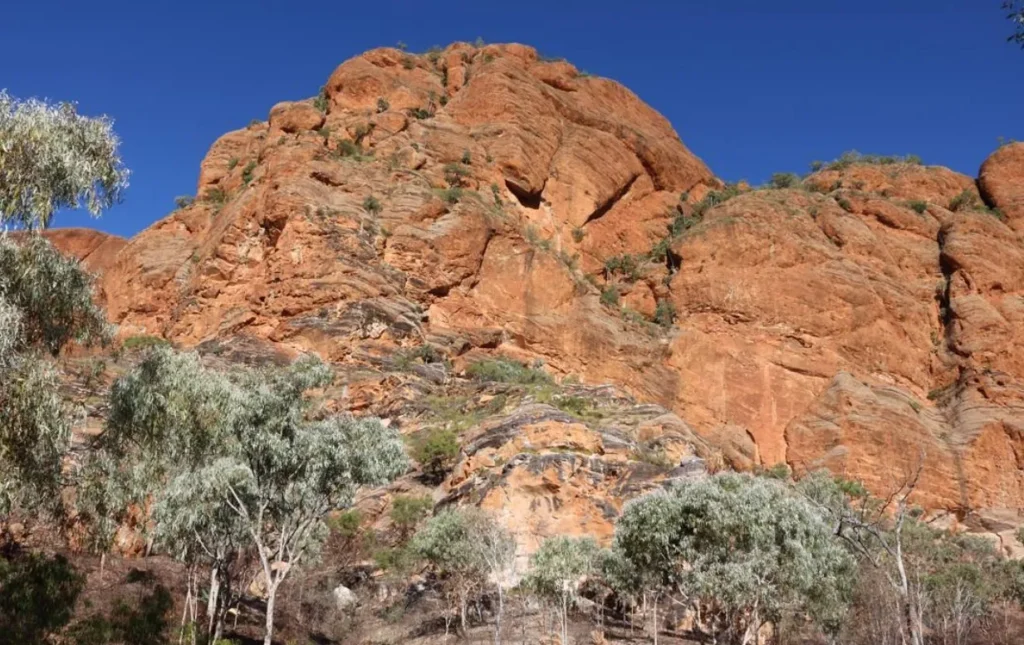
8. Bungle Bungle, Western Australia

bungle bungle range

Located 190 kilometres from Halse, the Bungle Bungle mountain range is approximately 350 million years old. The area was previously hidden underwater, and when the ocean receded due to a meteorite impact, an uneven plateau came to the surface. It took 20 million years for rain and winds to form the cone-shaped ridges that resemble beehives.

The sandstone is layered, with dark brown streaks alternating with bright orange ones. For 40 millennia, the Aborigines have honoured the area as a sacred site. Bungle Bungle forms part of Purnululu National Park, designated a World Heritage Site in 2003

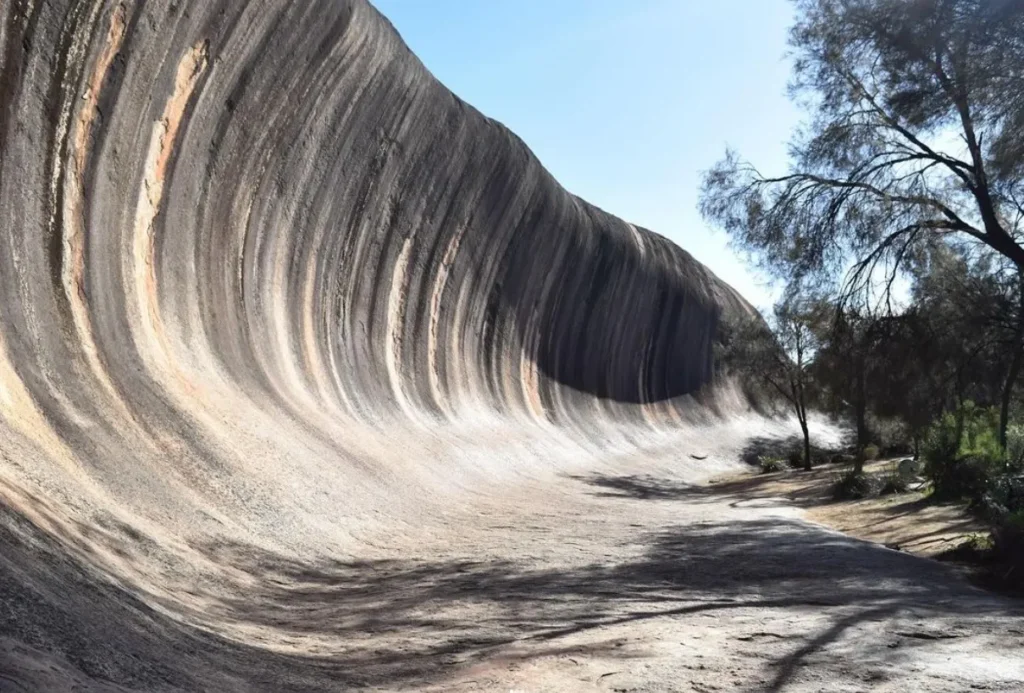
9. Undulating Rock, Western Australia

Wave Rock

Are you both frightened and fascinated by the waves raging in storms on the ocean? Then, you will be impressed by the stone tsunami. The granite formation covers an area of several hectares. It’s all that’s left of the Hayden Rocks. Years of erosion have not gone unnoticed, with rainwater flowing into the gully and washing away bits of stone.

In 1951, a protective wall was constructed along the contour of Wave Rock to prevent further erosion of the landmark at the behest of the Public Works Department. Its primary function is to channel sediment into special storage areas. 

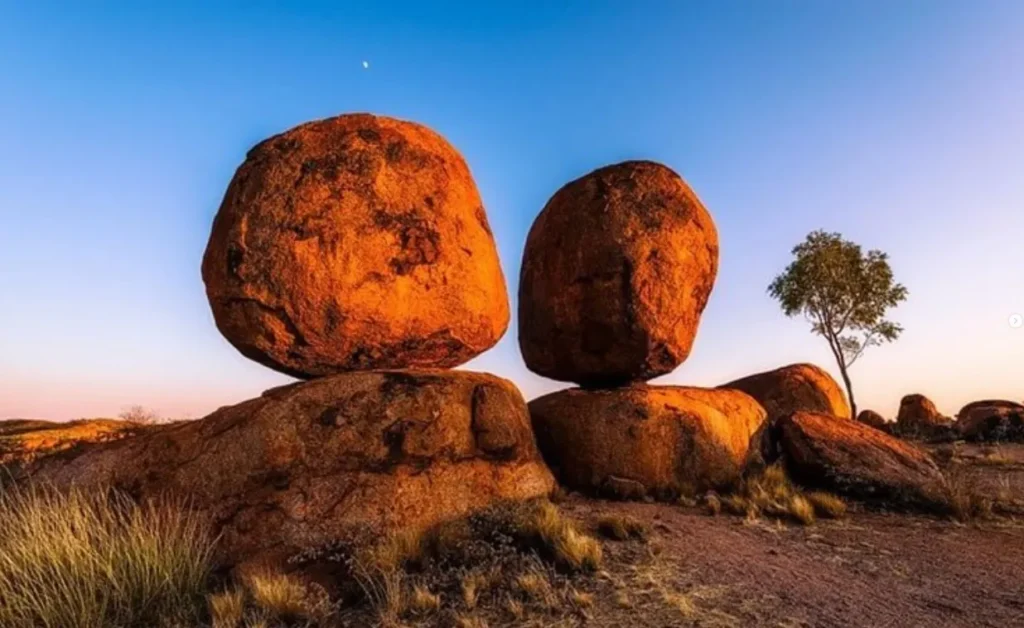
10. Devil's Rocks, Northern Australia

The most colourful symbol of Australia’s untamed wilderness lies in a small valley south of Tennent Creek. Karlu Karlu, the site’s second name, is used only by Aboriginal people. Rounded boulders sharpened on all sides balance on the progenitor rocks. It seems as if the giant’s child played with the heavy stones like cubes and scattered them around.

According to the ancient legend, these are the eggs of the sacred rainbow snake. Old Believers still hold rituals in the area. A later legend says that the Devil is responsible for forming the natural monument. The official version is much more prosaic. At the time of continental drift, Northern Australia was a tectonically active zone with frequent volcanic eruptions. The heterogeneous lava solidified and was subjected to erosion. 

READ  A Food Lover’s Guide to Melbourne: Best Restaurants and Cafes

11. Lake Hillier, Western Australia

Lake Hillier

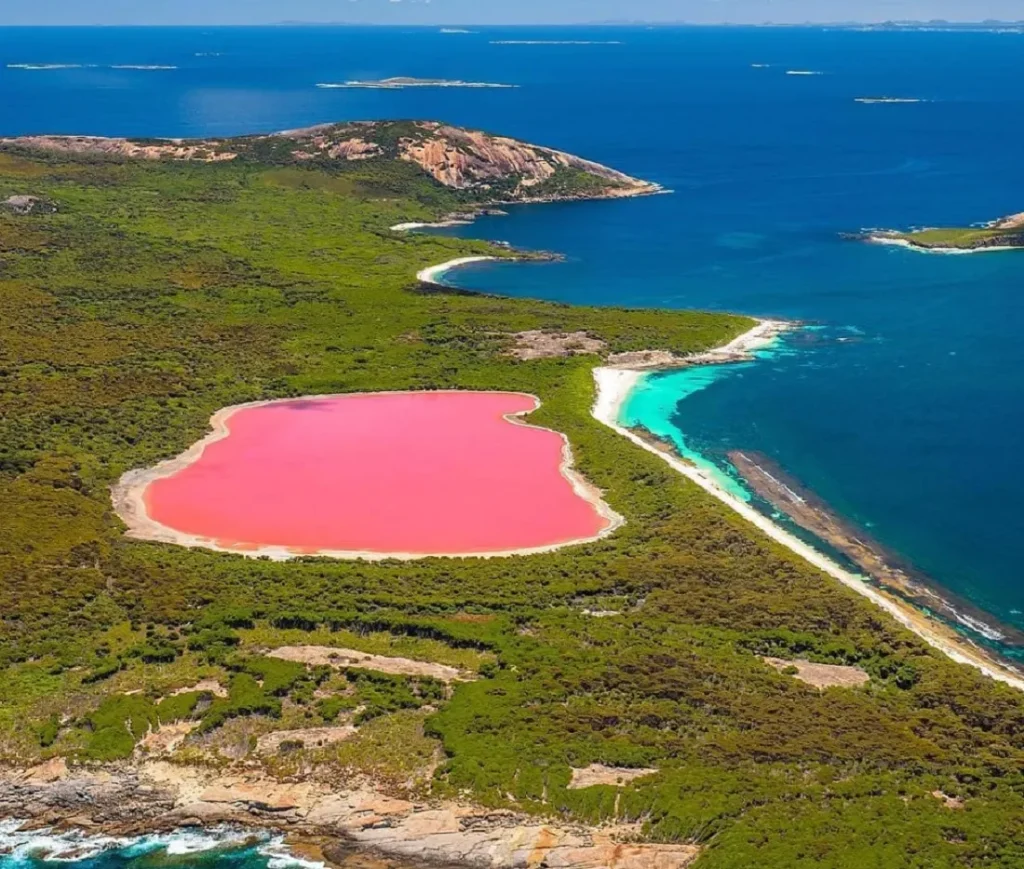
Close your eyes and let your imagination run free. Transport yourself to the heart of Middle Island. You’ll find sandy shores that blend into a dense rainforest. The scent of the sea and eucalyptus trees wafts through the air, but what’s that pink behind the bushes? Spread the branches with your hand, and you will see a lake of indescribable beauty. The colour of the body of water is similar to Barbie doll’s favourite outfits. Sounds like a fantasy film script.

Samples have been repeatedly subjected to physical and chemical analyses, but the exact composition of Lake Hillera has never been established. It is still known that the natural phenomenon is caused by mineral salts in the water, but what kind and proportion remains a mystery. 

12. Horizontal Waterfalls, Western Australia

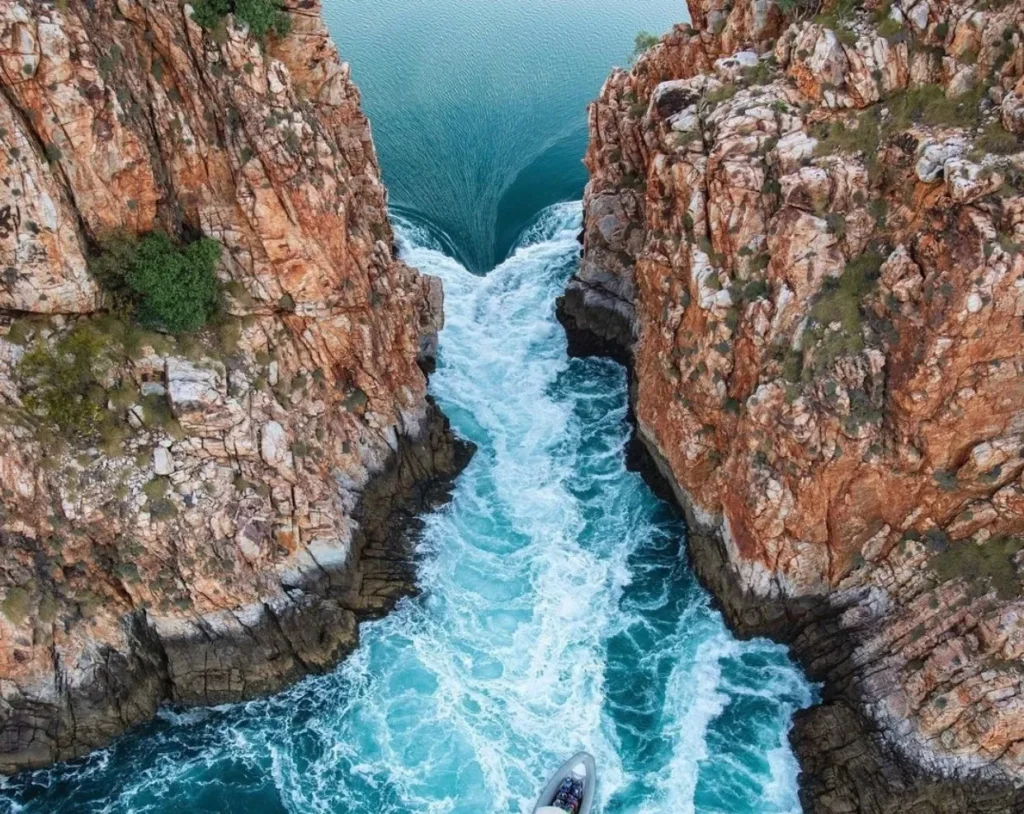
A surreal place in the Kimberley region. The horizontal waterfalls are formed by the significant difference in water level that occurs at high tide. The mountain ridges that form the McLarty Ranges stretch towards each other from opposite sides of the bay. They are only 10-15 metres away from touching. The association with the Simplegades, which almost killed the Argonauts, comes to mind.

Be sure to visit Talbot Bay and see with your own eyes how the hissing streams rush into the narrow cleft between the nearby rocks. The direction changes depending on the time of day. You’ll be amazed by the unstoppable rush as it falls from 4 metres high and shimmers in the hot sun. 

13. Blue Mountains, New South Wales

Blue Mountains

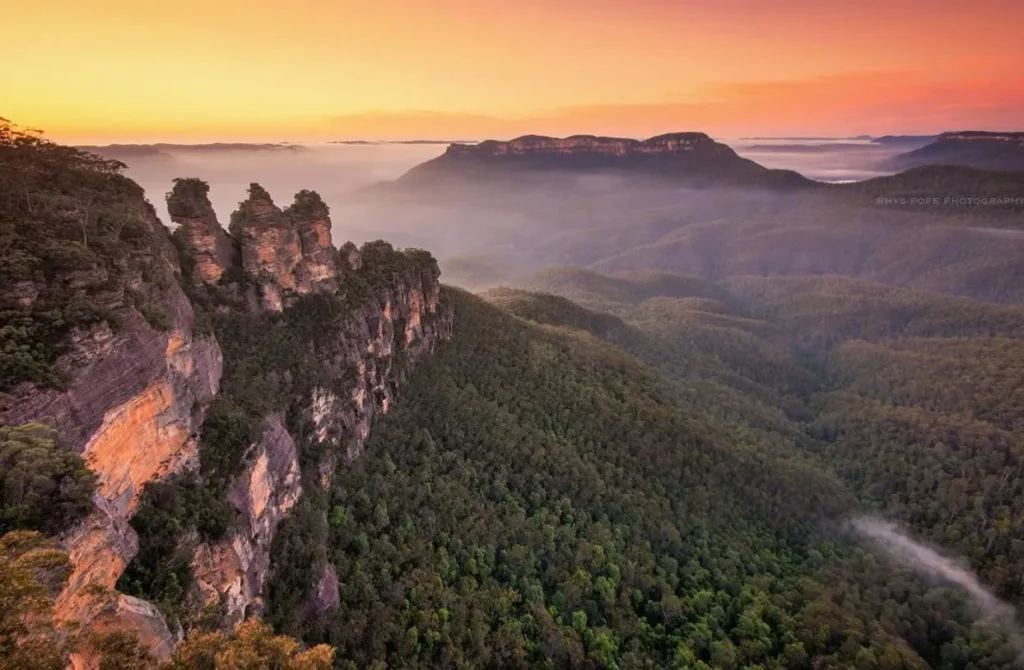
The scenic Blue Mountains can’t be travelled on Saturdays. So make sure you can’t time and comfortable tents. The area is a World Heritage Site. Eucalyptus forests have not changed since the time of the dinosaurs. The trees actively secrete essential oils, which causes a dense blue haze to hang over the valleys (hence the name).

Tourists are attracted not only by the beauty of nature but also by the fantastic tales of love. A vivid example is the legend of the three sisters. The girls fell in love with boys from a neighbouring tribe, and they reciprocated. However, strict customs did not allow the young people to get married. Then, the young men decided to steal the beauties. A severe war broke out between the tribes. Before the decisive battle, the shaman turned the girls into mountains but died himself and could not unbind Mihni, Vimla and Ganneda. The three cold stone peaks remained standing there, waiting for their soulmates. 

14. Remarkable Rocks, South Australia

Remarkable Rocks, South Australia

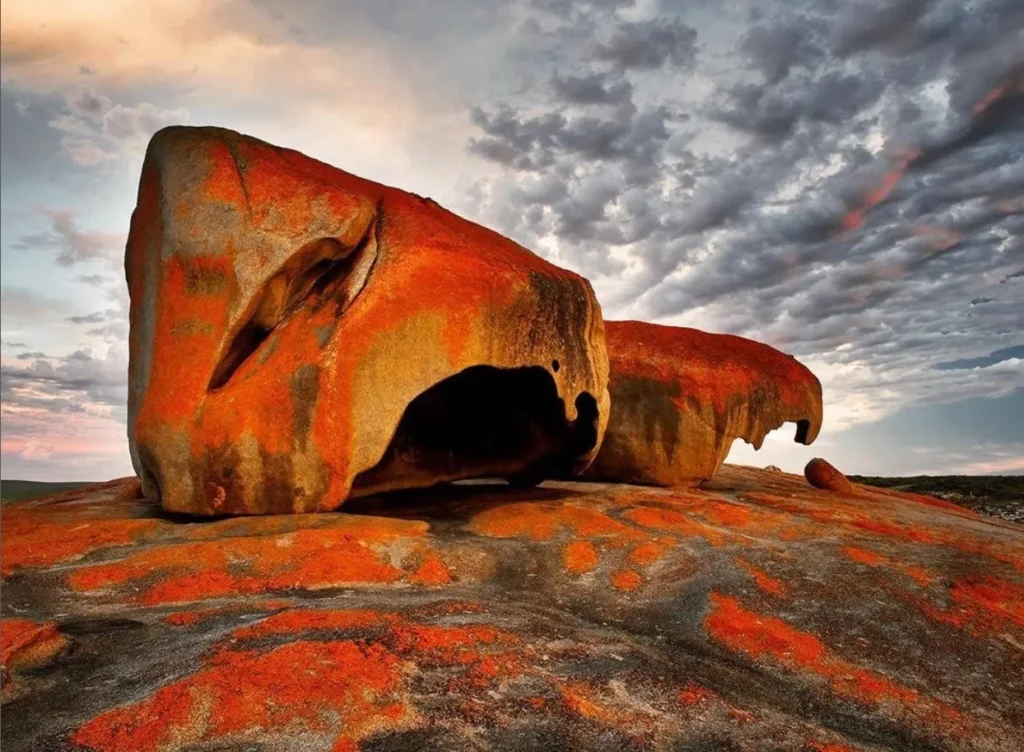
No holiday or festival on Kangaroo Island is complete without a procession to the Remarkable Rocks. It took nature 500 million years to use rain, wind and wave action to carve the giant blocks of rock that are now part of Flinders Chase National Park.

Early mornings and evenings are the best time to visit Kangaroo Island. You’ll be able to avoid visitors and enjoy the sunrise. You’ll be able to sit against a backdrop of impressive natural sculptures without rushing. Black mica, bluish quartz, feldspar and pinkish granite are intertwined in the rock. A wooden bridge leads to the attraction, eliminating the risk of painful falls on pebbles due to attempts to climb the rocks. 

15. Super Pit, Kalgoorlie, Western Australia

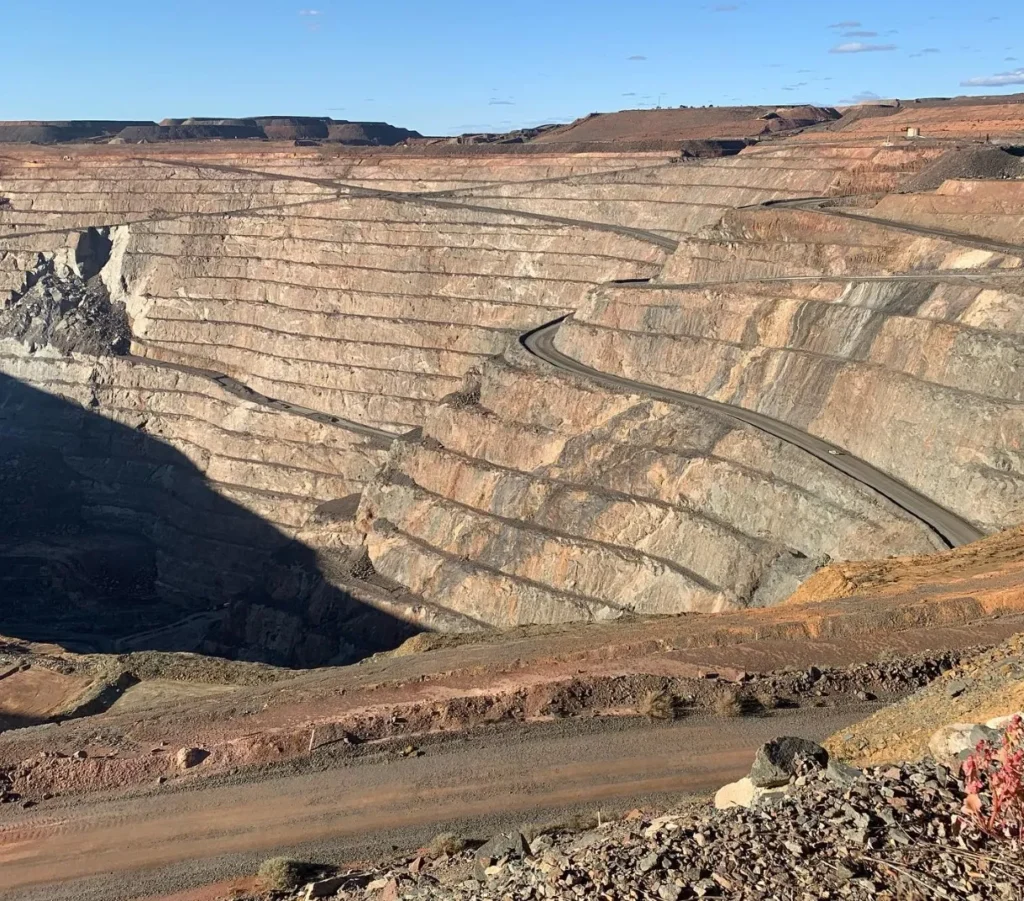
Although the Gold Rush era is far behind us, deposits discovered in the early twentieth century continue to yield tonnes of precious metal. Super Pete is the largest open pit mine in the world. Five hundred fifty workers descend to a depth of 360 metres daily for the nuggets. The size of the pit is constantly growing. Today, it is 3,500 metres long and 1,500 metres wide.

Getting to the mine is not easy. It is necessary to obtain permission from the owners for a private visit or to buy a seat on a sightseeing bus. A unique observation platform was built for tourists, fenced around the perimeter with steel mesh. An information board shows the blasting schedule required for the mines’ expansion the mines. 

16. Ball's Pyramid, Lormines' Island

Ball's Pyramid

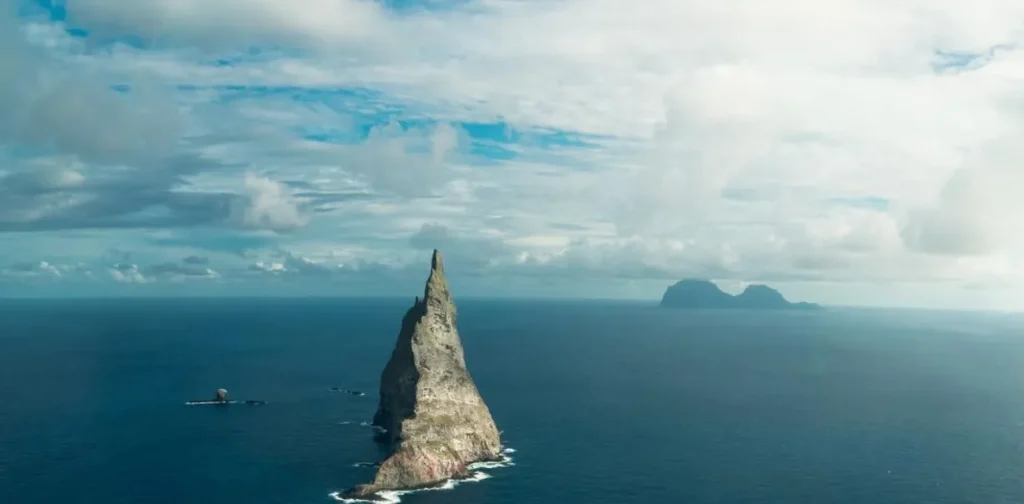
Once upon a time, there was fiery chaos on Earth. Volcanoes erupted everywhere, but then the planet returned to normal. One of the most giant rocks in the world is essentially a remnant of those hot days. It was discovered in 1788 by the captain of the ship Seplay, who immodestly gave the island its name. Naturalists were in no hurry to explore the Pyramid of Ball; the first expedition was organised only in 1882. Today, the volcanic cliff is listed in the Guinness Book of Records and is considered a tourist attraction. 

READ  Things to do Great Ocean Road

In 2013, entomologists discovered an insect population on the island that had been thought to be extinct for 95 years. It is none other than the Tree Lobster or Australian Stickleback. The length of an average individual reaches 12 cm, excluding the legs and antennae. The insect is not dangerous to humans and feeds on shrubs that grow only on the Bolla Pyramid. What can we say? Supernatural creatures must live in a mystical place.

17. Valley of the Giants, Western Australia

Valley of the Giants

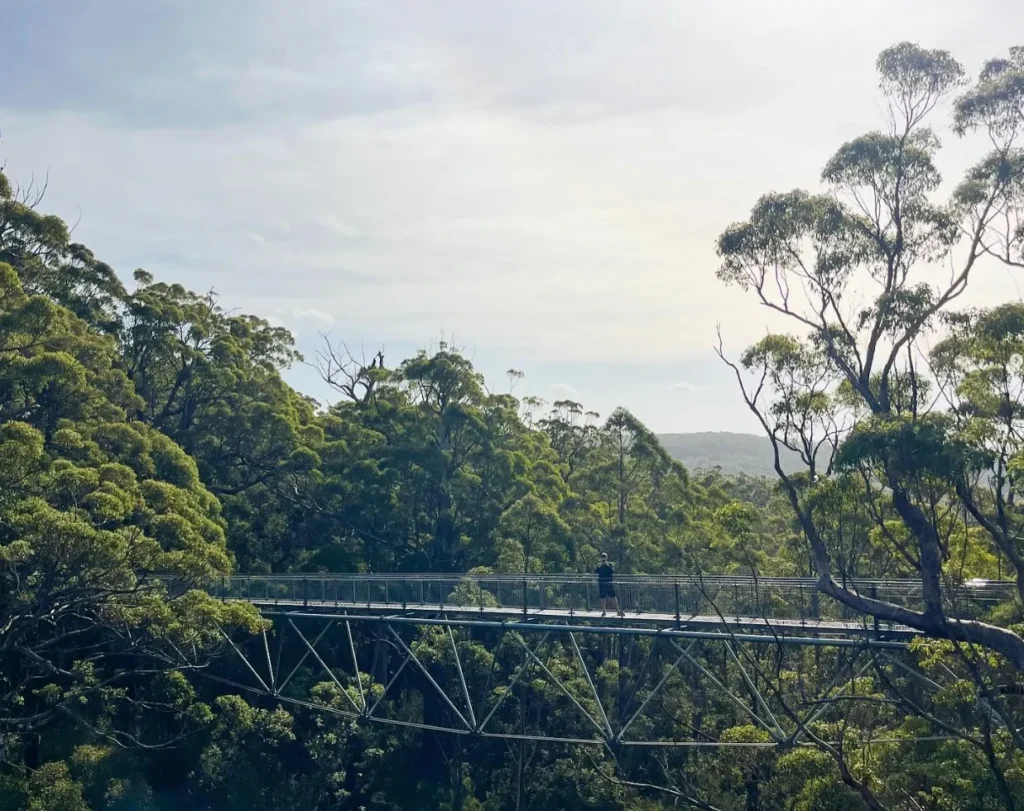
Walpole-Nornalup National Park is known for its vast prehistoric forests, consisting mainly of giant eucalyptus trees and dense fern thickets. Individual specimens are up to 60 metres tall, with trunk girths of 15 metres. It took the trees at least 400 years to grow to this impressive size.

It feels like a grain of sand next to the imposing silent giants. Visitors are quickly brought to the crown of the Diamond Tree by a lift. At the foot of the trunk is a cosy cafe where you can have lunch in the shade of bushes. There is a suspended walking trail at a height of 40 metres above the ground. The walk will tickle your nerves and give you an unforgettable experience. 

18. The Twelve Apostles, Victoria

The Twelve Apostles, Victoria

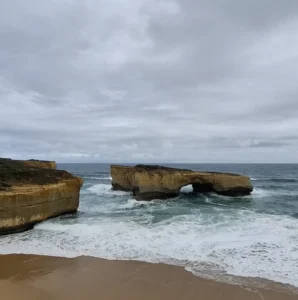
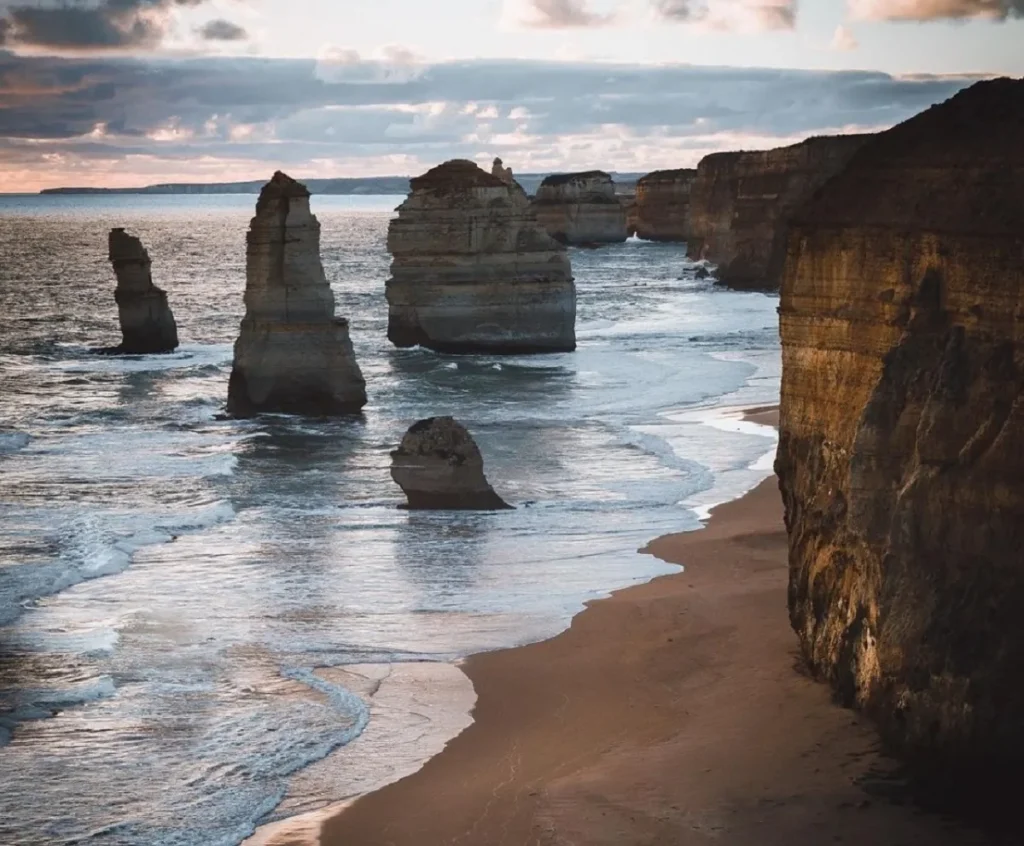
Within the Port Campbell National Park, there is a fantastic place that attracts visitors with its impressive ascetic beauty. Off the coast, eight yellow sandstone cliffs stand close to each other. ‘Why, then are they called the Twelve Apostles?’ – you ask. The answer is simple: there really used to be more of them, but the stone pedestals could not withstand the pressure of storms and collapsed into the abyss of the sea.

Tourists here, as if honeyed. During the holiday season, there are queues for observation platforms. Everyone wants to be photographed against a mind-blowing background. In the evening, Australian penguins flood the beach at the Twelve Apostles. The little birds make their nests among the rocks inaccessible to humans.

Don’t just sit there. Pack your bags and go on the adventure. After visiting all 18 selection locations, you will become the happiest and most tanned representative of the human race. Unrivalled photos will complete your album, and later, you will be proud to show them to your grandchildren and tell stories about unusual places in Australia. 

Interesting articles
Scroll to Top