Kakadu National Park in Australia

Don’t miss out on sightseeing in Northern Australia: The gigantic Kakadu National Park. Below are essential tips and information about your trip to this fantastic national park near Darwin. Have fun with the highlights in the wonderful Kakadu National Park!

Rock paintings are thousands of years old, crocodiles that slowly meander through the rivers, fabulous waterfalls, and gorges. Kakadu National Park – Australia’s largest national park – impresses with its diversity. It covers a gigantic 20,000 km² and only 5 per cent of the park is accessible by road. By comparison, it is almost half the size of Switzerland.

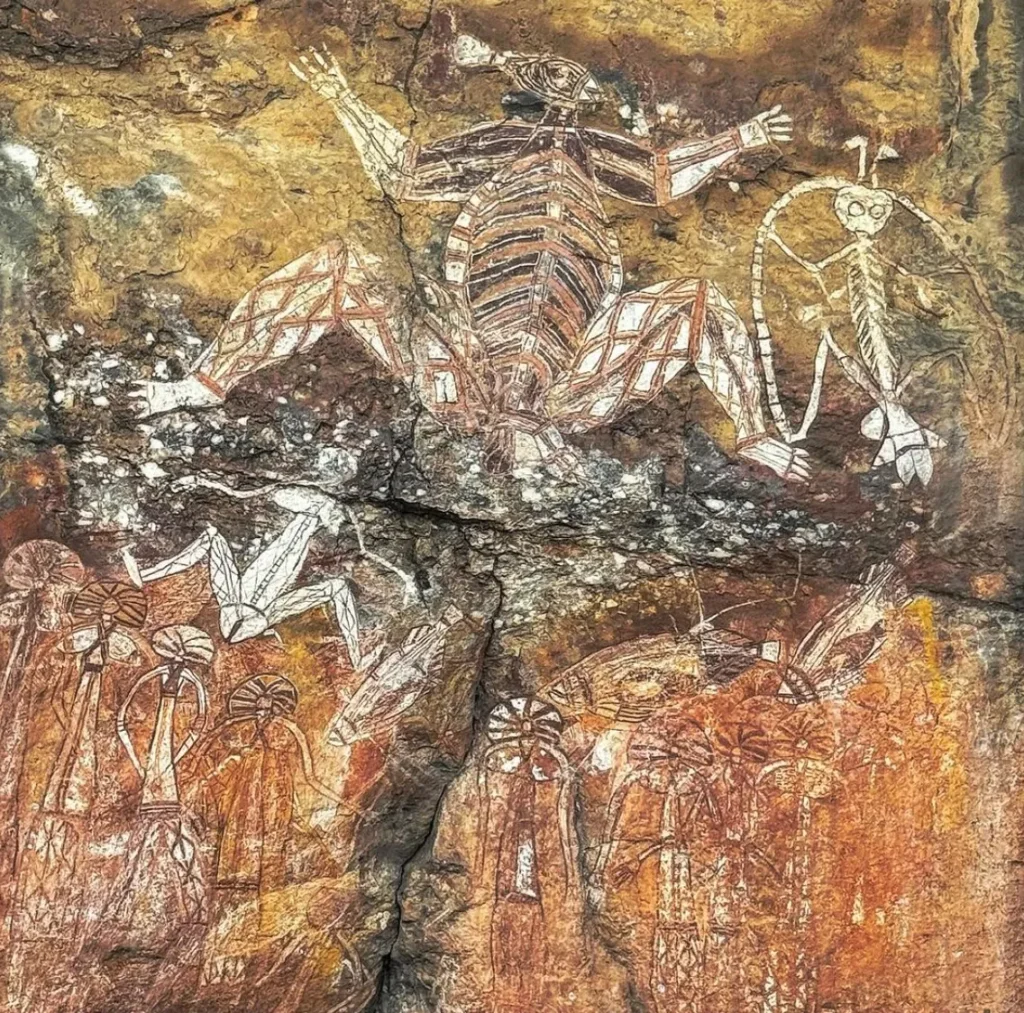
At the accessible Aboriginal sacred sites, you will immerse yourself in the history of Australia’s indigenous people as you view the marvellous rock paintings. For example, at Nourlangie Rock. The landscape is more varied than in almost any other national park: mangrove forests, partly flooded grasslands, savannah-like lowlands and reddish-brown rock formations are just some of the landscapes characterising this impressive landscape. 

In short, it is one of the most beautiful national parks in Australia!

Before travelling to Kakadu National Park, it’s worth informing yourself and planning your trip. Due to the size of the park, many unpaved roads, the presence of crocodiles and the rainy season from November to April, it can often happen that one or the other attraction is closed for a visit or only accessible to a limited extent, e.g. only for 4WD (‘4-Wheel Drive’) off-road vehicles. 

All the highlights!

Entrance fee

  • $40 p.p. in the dry season (mid-May – October) or $25 p.p. in the rainy season (November – early May), valid for 7 days. It can be extended for a further 7 days on request at the Park Entry Station.
  • A free park pass must be obtained before visiting the national park. This can be done online here or at numerous sales outlets (in Darwin, for example, at the Youthshack Hostel or Self Drive Shop; in Katherine at the Katherine Visitor Centre; in Kakadu National Park at the Visitor Centre and several accommodation establishments). 

Opening hours

  • all year round
    Special feature: Wet season (Nov – April). Some attractions are then completely closed – depending on the intensity of the rainfall until May/June. Other areas of the huge park may also be inaccessible due to road flooding. During this period, it is worth clarifying this in advance.
  • Find out here which roads and areas of the national park are closed or open, or ask at the Visitor Centre in Kakadu National Park.
READ  Things To Do In The Northern Territory

Main Attractions

Gunlom

Gunlom

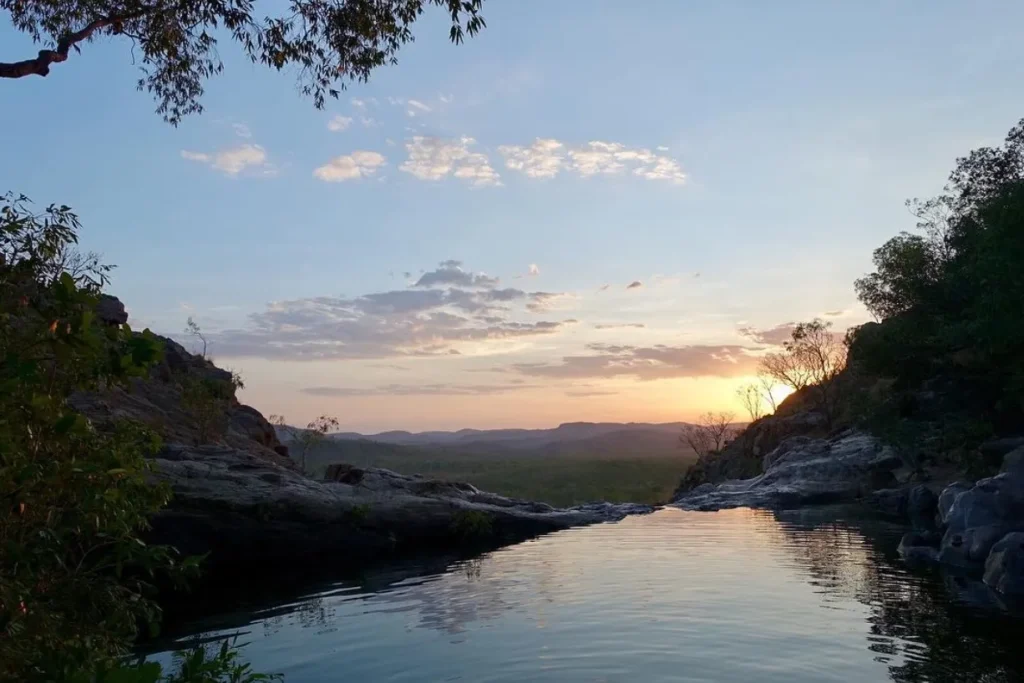
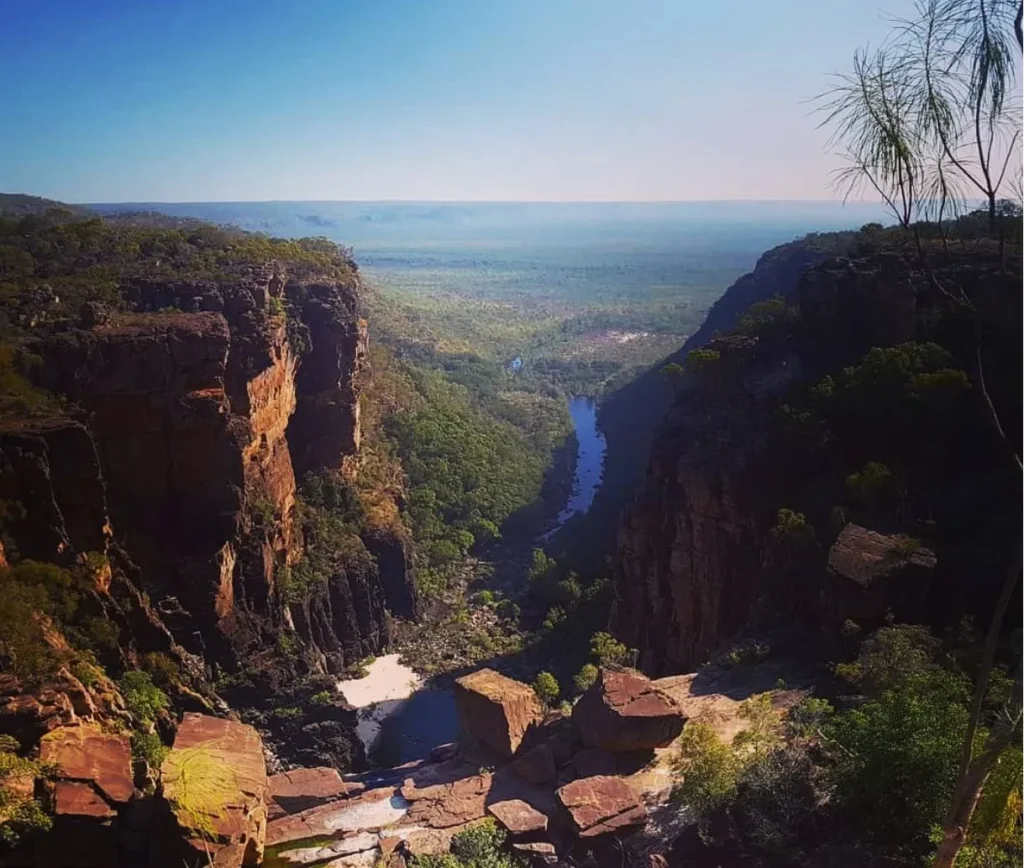
Swimming on the dizzyingly high roof of a gorge. Such a magical place awaits you in Gunlom: small waterfalls, pools and views of the endless expanses of Kakadu National Park. The short and steep climb up the Gunlom Lookout Walk is well worth it. Afterwards, you will be rewarded with a sensational view.

The Gunlom Gorge is also a great gorge to look at. The strength of this high waterfall varies depending on the season. Many daredevils treat themselves to a refreshing dip in the pool below. Daring because Kakadu National Park is known for its crocodiles. ‘No worries’ and all that.

Note: Gunlom is only accessible during the dry season from May to October via a mostly unpaved road. Depending on the severity of the previous rainy season, Gunlom may only open at the end of May or in June. Road conditions are constantly changing, even during the dry season. Suppose you have a two-wheel drive (2WD) vehicle, e.g. a campervan, and want to drive to Gunlom. In that case, it is worth enquiring about the current road conditions at the Visitor Centre in the National Park or online here, as the route is sometimes only open to 4WD (4-wheel drive) off-road vehicles

Barramundi Gorge (Maguk) Waterfall

Barramundi Gorge (Maguk) Waterfall

A wonderful and entertaining hike leads into the pretty Maguk Gorge. One of the many waterfalls in Kakadu National Park flows into a pool surrounded by medium-high rock faces. Green reeds create a contrasting picture. Accompanied by the babbling of the river and the twittering of birds, you will be surrounded by pure, idyllic nature.

Note: From May to October, Maguk can only be reached by 4WD (4-wheel drive) off-road vehicles in the dry season. Depending on the severity of the previous rainy season, Maguk may only open at the end of May or in June. 

Yellow Water

Yellow Water

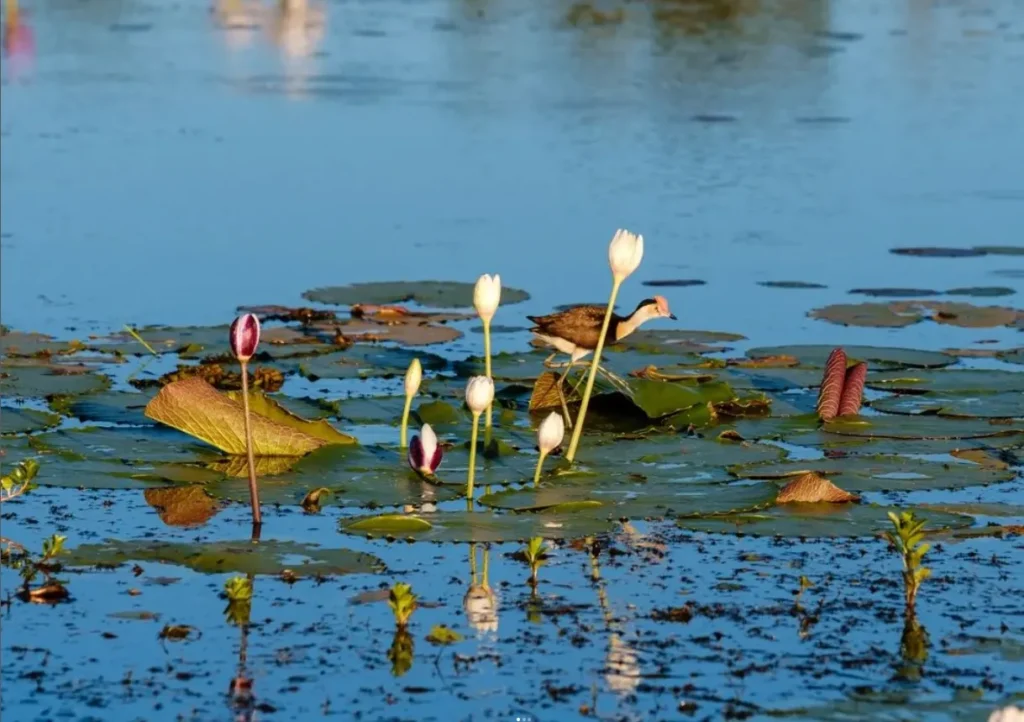
The name may be confusing. When you arrive at Yellow Water, you will realise that the water there is not yellow but deep blue. Green reeds embrace the river. This place is a colourful photo motif, coupled with the bright blue sky and the golden yellow sunlight in good weather. It also forms a contrasting programme to the many gorges and waterfalls of the national park. The marshland there is flat and idyllic.

Not only bird lovers will get their money’s worth. If you closely watch the water’s surface, you can see crocodiles there. They swim – sometimes leisurely – in the water. You can either take a short walk along a boardwalk that ends abruptly. Or you can take a boat trip through the marshes. A great place that you should see.

READ  Things To Do In Yarra Valley

Note: During the rainy season from November to April, Yellow Water may be closed (check here or ask at the Visitor Centre). Depending on the severity of the previous rainy season, the closure may last until the end of May or June.

Jim Jim Falls

Jim Jim Falls

Nestled in an impressive gorge, this wonderful waterfall is worth your visit and the somewhat adventurous journey to get there. It is one of the top sights in Kakadu National Park. A 50-kilometre-long unpaved gravel road leads to a campground. From there, it’s another 8 kilometres along another unpaved, partly sandy track to the Jim Jim Falls car park.

Then it’s almost done! After a hike, you reach the impressive gorge with its high waterfalls. This gorge is simply gigantic. Depending on the time of year (especially in the middle of the dry season), the Jim Jim Falls may be more or less dry. However, the impressive gorge with its mighty rock faces is still worth a visit! A fantastic must-see!

Note: The Jim Jim Falls can only be reached by 4WD (4-wheel drive) off-road vehicles with high ground clearance in the dry season from May to October. Depending on the severity of the previous rainy season, Jim Jim Falls may not open until the end of May or June. From November to April, the waterfalls are full of splendour in the rainy season. You can only see this natural spectacle from an air helicopter flight. Access by road is closed at this time.

Nourlangie

Nourlangie Rock

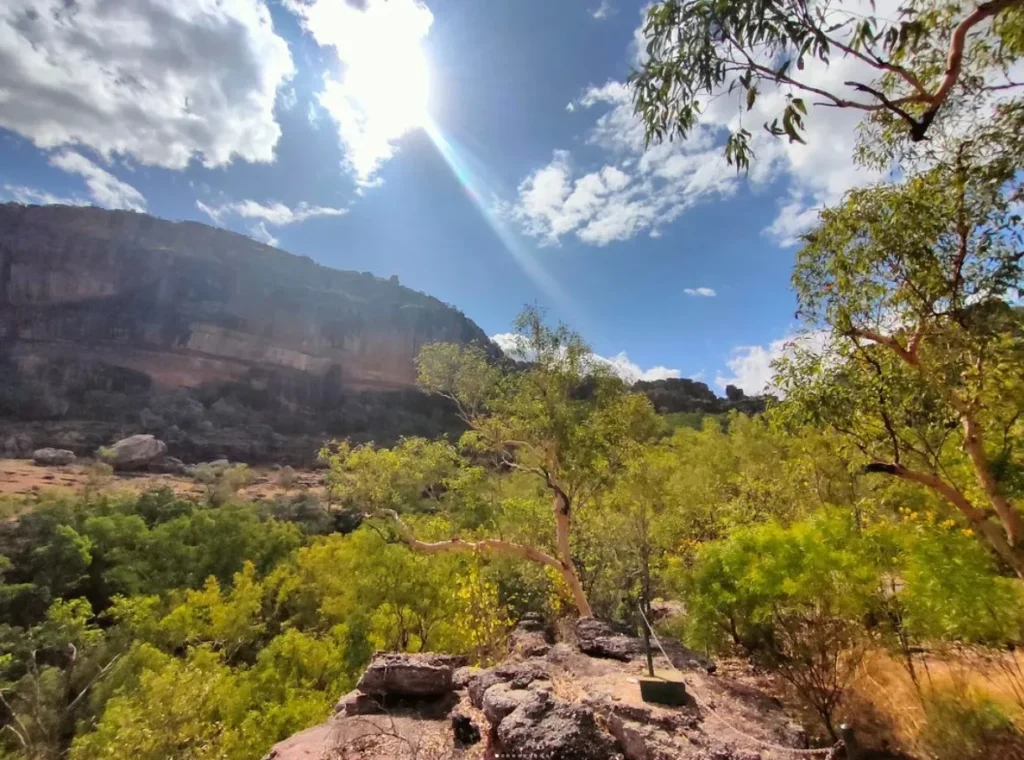
In Nourlangie, you will not only come across the imposing Nourlangie Rock, which makes a wonderful photo motif. A circular route also takes you through several caves. There, millennia-old paintings will take you back to the history of Australia’s indigenous people. Daily guided tours – a recommended activity in Kakadu National Park – will teach you more about the paintings’ significance. Nourlangie is one of the top sights in Australia.

Anbangbang Billabong

A circular path leads around this beautiful lake, from where you will have a fabulous view of Nourlangie Rock. The dark, shallow lake lies there peacefully. The mighty Nourlangie Rock rises in the distance. It looks like the imposing rock is watching over the beautiful landscape of Kakadu National Park. Anbangbang Billabong is also home to crocodiles – the silent giants.

So you have the chance to spot one or two of these animals. It may lie cosily at the edge of the lake, or its eyes may be peeking out of the water’s surface.

READ  Saline vs. Laser: Which Eyebrow Tattoo Removal Method is Best?

Note: In the rainy season, from November to April, the Anbangbang Billabong loop trail may be closed (check here or ask at the Visitor Centre). Depending on the severity of the previous rainy season, the closure may last until the end of May or in June. 

Ubirr

Ubirr is home to another marvellous collection of Aboriginal rock paintings. The Ubirr Rock Walk allows you to explore some of the sacred sites. Aboriginal knowledge has been passed down from generation to generation through these rock paintings. There is even an image of the Tasmanian tiger, which is now extinct, on one of the rock faces.

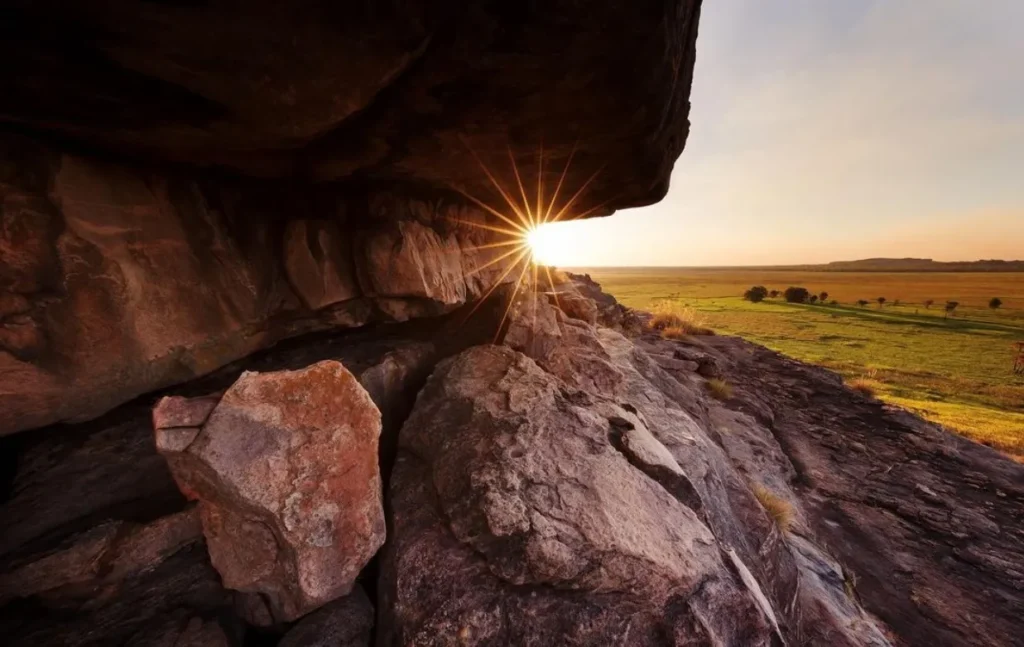
A short climb awaits you at the centre of the circular trail, and it’s worth it! There, you will see the flat, green plains of this region of Kakadu National Park and be rewarded with a sensational view. A wonderful place and one of the highlights of Kakadu National Park!.

Note: The opening hours of Ubirr are from 8:30 am – sunset (April – Nov) and 2:00 pm – sunset (Dec-March).

Interesting articles

Scroll to Top